Published: February 26, 2026 · Updated: September 26, 2026 | Reading Time: 9 minutes
Picture the scene: you have found a tiny ramen shop, there are eight seats, a line of locals behind you, and the ticket machine is covered in Japanese. You have a few moments to decide. The ramen itself is not the hard part. Figuring out what all those buttons mean is.
That is why a small set of ramen words is so useful. Once you know the main styles, noodle options, toppings, and a few ordering phrases, you can walk in with a much better idea of what you are choosing. This guide covers 20+ useful terms, with the practical details that matter when you are actually standing at the counter.
Quick Reference: 10 Useful Ramen Terms
| Japanese | Meaning | Where you may see it |
|---|---|---|
| とんこつ tonkotsu | pork-bone broth | ramen style |
| しょうゆ shoyu | soy sauce seasoning | ramen style |
| かため katame | firmer noodles | noodle preference |
| 替え玉 kaedama | extra noodles | especially Hakata-style shops |
| チャーシュー chashu | braised pork | topping |
| 味付け卵 ajitsuke tamago | seasoned egg | topping |
| にんにく ninniku | garlic | customization |
| 大盛り oomori | large portion | portion option |
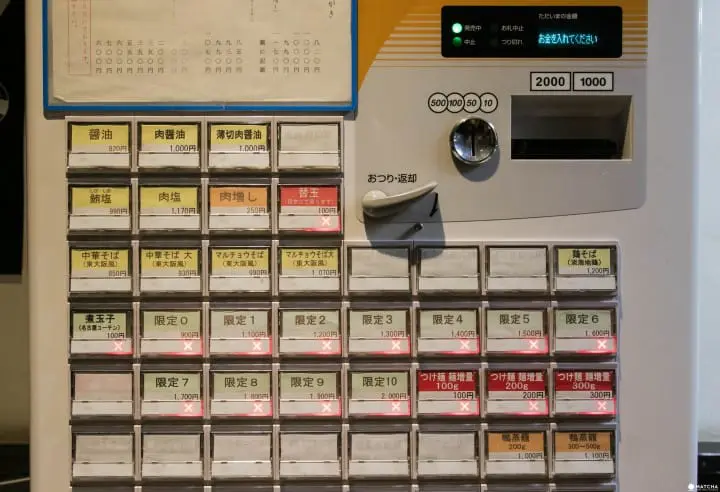
| 券売機 kenbaiki | ticket vending machine | ordering |
| ごちそうさまでした gochisousama deshita | thanks after a meal | leaving |
On This Page
1. Why Ramen Vocabulary Matters 2. Four Common Ramen Styles 3. Noodles & Texture 4. Toppings 5. Customization & Ordering Options 6. Ordering Phrases & Etiquette 7. Beyond Ramen: Keep Learning 8. Frequently Asked Questions1. Why Ramen Vocabulary Matters
Some tourist-area restaurants have English or picture menus. Ramen shops vary much more. You may find a handwritten menu, a Japanese-only ticket machine, or a row of buttons where you need to make a choice before the people behind you are waiting. I have found that knowing even 10–20 words changes the experience: instead of pointing at something and hoping, you can recognize what you are ordering.
Beyond just ordering, a few of these words let you customize your bowl: noodle firmness, broth richness, extra fat, extra garlic. That customization is a real part of the ramen experience at many shops, and it's completely inaccessible if you don't know what you're being asked.
2. Four Common Ramen Styles
Ramen terminology can describe broth, seasoning, or a regional style, so these four terms are useful starting points rather than a strict classification of every bowl. For regional examples and background, see Japan's official ramen guide and JNTO's guide to regional ramen towns.
Tonkotsu
- Japanese
- とんこつ
- Meaning
- Pork bone broth
- Notes
- A rich, cloudy broth made by cooking pork bones for a long time. Tonkotsu is strongly associated with Kyushu, especially Fukuoka/Hakata, where thin noodles and kaedama are common. It is now served throughout Japan, so you will see it well outside Kyushu.
Shoyu
- Japanese
- しょうゆ
- Meaning
- Soy sauce broth
- Notes
- Clear to amber-brown in color, with a savory, slightly sweet flavor from soy sauce seasoning. Often built on chicken, seafood, or dashi-based stock. Shoyu ramen is strongly associated with Tokyo, but you will find it throughout Japan. A menu that simply says ramen does not necessarily mean shoyu, so check the shop's options.
Shio
- Japanese
- しお
- Meaning
- Salt broth
- Notes
- The lightest of the four. Clear or pale gold, seasoned with salt rather than soy or miso. Often made with chicken, seafood, or both. It can be a useful choice if you want a lighter-tasting bowl, although recipes vary by shop.
Miso
- Japanese
- みそ
- Meaning
- Fermented soybean paste broth
- Notes
- Rich and complex with a slightly earthy, umami-forward flavor. Associated with Sapporo in Hokkaido, where it developed partly to stand up to cold winters. Often served with corn and butter as standard toppings in the Hokkaido style.
Two More Broth Terms Worth Knowing
You'll also see these two words on menus, usually as descriptors rather than broth base types:
3. Noodles & Texture
At many ramen shops, especially Hakata-style tonkotsu places, staff may ask how you want your noodles cooked. The question can come quickly at the counter. If you know katame, yawarakame, and futsuu, you can answer instead of trying to guess what you just heard. If the shop does not offer these choices, there is nothing you need to say.
Men
- Japanese
- 麺
- Meaning
- Noodles
- Notes
- The word for noodles. Knowing this one lets you parse a lot of menu items: men katame means firm noodles, men yawarakame means soft. You'll also see it in compound words like chashu-men (ramen with extra chashu) and tsukemen (つけ麺, dipping noodles).
KatameEssential
- Japanese
- かため
- Meaning
- Firm noodles
- Notes
- Katame means firmer noodles. If you prefer more bite, this is the option to choose. It is sometimes shortened to kata. Hakata-style shops often use a longer scale, from softest to firmest: yawa, futsuu, kata, barikata, harigane, and at some shops kona-otoshi (barely cooked). Barikata is a popular choice there.
Yawarakame
- Japanese
- やわらかめ
- Meaning
- Soft noodles
- Notes
- Cooked longer, softer texture. Some people prefer it, and there's nothing wrong with that. If you're not sure, the default (futsuu) is usually somewhere in the middle and is completely fine.
KaedamaEssential
- Japanese
- 替え玉
- Meaning
- Extra noodles
- Notes
- An additional serving of noodles added to your remaining broth. It is especially associated with Hakata-style tonkotsu, where the noodles are often thin and cooked quickly. A kaedama commonly costs around 100–200 yen, although the price varies by shop. Call for it when your first noodles are about 80% gone, while you still have plenty of hot broth.
4. Toppings
Standard bowls come with a set of default toppings. Some shops let you add more, and many ticket machines have topping buttons you can select alongside your base order. These are the ones you'll actually encounter, worth knowing both so you know what's in your bowl and so you can ask for extras.
Chashu
- Japanese
- チャーシュー
- Meaning
- Braised pork belly or shoulder
- Notes
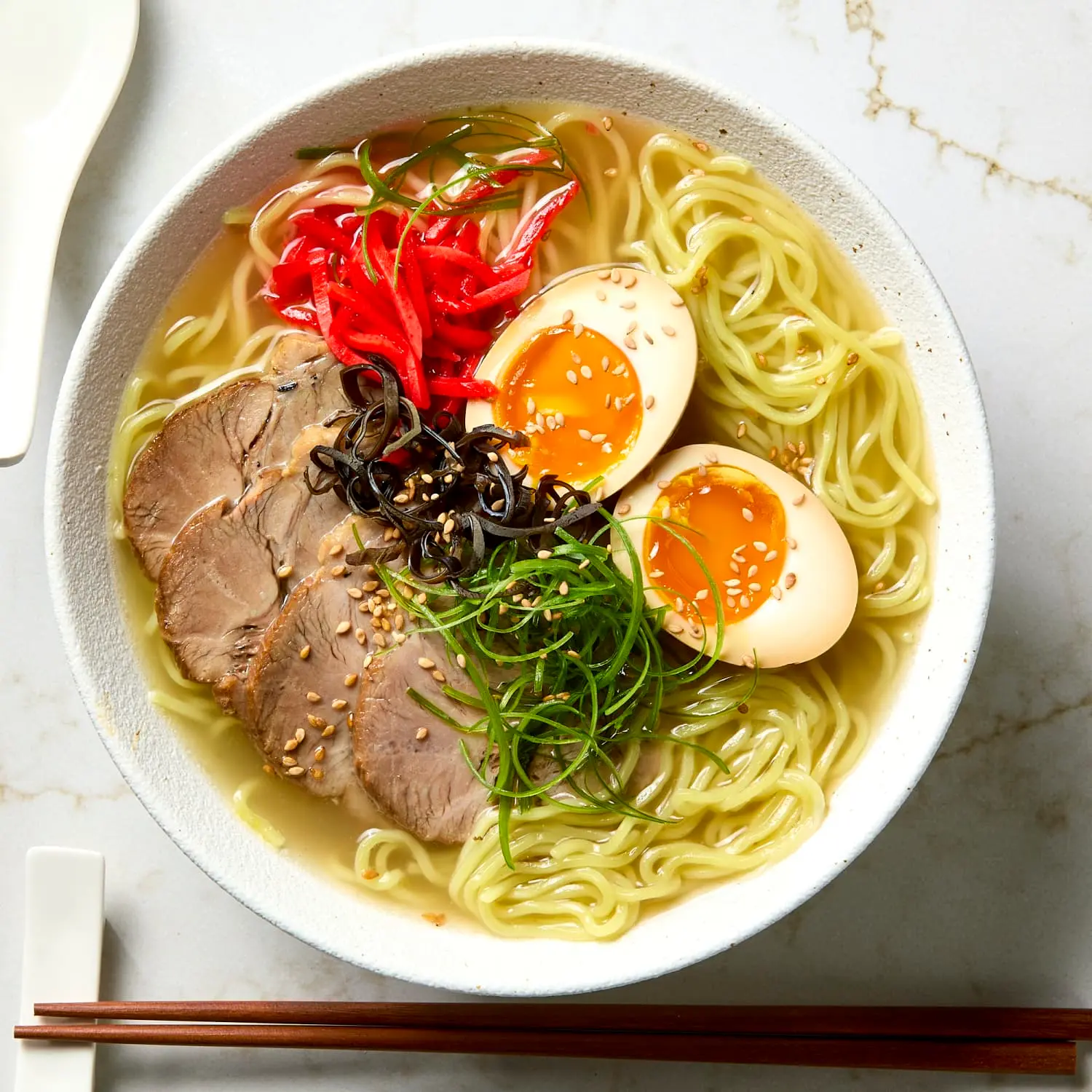
- A common ramen topping made from braised pork, usually sliced. Chashu-men refers to ramen served with extra chashu.
Ajitsuke tamago / Nitamago
- Japanese
- 味付け卵 / 煮玉子
- Meaning
- Marinated soft-boiled egg
- Notes
- A soft-boiled egg that's been marinated in soy sauce, mirin, and sometimes sake until the white is brown and the yolk is jammy. Often listed as ajitama for short on menus and ticket machines. If the base bowl does not include one, it is a common extra; around 100–200 yen is a useful price range to expect, although shops set their own prices. It is one of the first add-ons I look for when I want a richer bowl.
Nori
- Japanese
- のり
- Meaning
- Dried seaweed
- Notes
- The thin sheets of dried seaweed standing upright in the broth. Mostly there for presentation, but they absorb broth quickly and add a bit of umami as they soften. Let them soak for a minute before eating.
Menma
- Japanese
- メンマ
- Meaning
- Bamboo shoots
- Notes
- Fermented and seasoned bamboo shoots: pale yellow, slightly crunchy. One of the most common ramen toppings, and one that confuses a lot of first-timers who aren't sure what they're eating.
Negi
- Japanese
- ねぎ
- Meaning
- Green onion / scallion
- Notes
- Chopped and scattered on top, adding a fresh, slightly sharp bite that cuts through rich broth. Some shops use white leek instead of green onion. Either way, it's usually listed as negi on the menu.
Moyashi
- Japanese
- もやし
- Meaning
- Bean sprouts
- Notes
- Common in miso ramen especially. Adds texture and lightens the bowl slightly. In Sapporo-style miso ramen, you'll often get a generous pile of them along with corn and a pat of butter.
5. Customization & Ordering Options
At Hakata-style tonkotsu shops in particular, staff may ask about your preferences when you order, and a few chains hand you a small order form instead. The questions come quickly. These are the words that let you answer them without just nodding at everything.
Ninniku
- Japanese
- にんにく
- Meaning
- Garlic
- Notes
- A common add-on at tonkotsu shops, usually offered as fresh minced garlic that you can stir into the broth yourself. The answer is ari (yes, I want it) or nashi (no, skip it). Worth saying yes to at least once, especially on your first bowl: it's a significant flavor change.
Seabura
- Japanese
- 背脂
- Meaning
- Back fat
- Notes
- Pork back fat, offered as an optional addition that gets ladled over the top of the bowl. It melts into the broth as you eat and makes the bowl richer and heavier. It is the signature of Tokyo-style se-abura shoyu ramen and Jiro-style bowls, where you may be asked how much you want. If you're already nervous about the fat content, skip it.
Karasa
- Japanese
- 辛さ
- Meaning
- Spice level
- Notes
- Some shops ask about spice preference. The word for spicy is karai; karasa nashi or karakunai means no spice. The exact options, such as a spicy version or a numbered spice level, depend on the shop.
Oomori
- Japanese
- 大盛り
- Meaning
- Large serving / extra noodles
- Notes
- Oomori means a larger portion. Whether it is available, and whether it costs extra, depends on the shop.
Han raisu
- Japanese
- 半ライス
- Meaning
- Half serving of rice
- Notes
- Han raisu means a half portion of rice. Some ramen shops offer it as a side dish, and in some tonkotsu shops rice is eaten with the remaining broth after the noodles are finished. It is not a universal ramen-shop custom, so treat it as an option rather than an expected final course. How it is served and priced varies by shop.
6. Ordering Phrases & Etiquette
Most ramen shops are set up to minimize conversation: ticket machines, counter seating, and clear visual menus make the ordering process fairly self-contained. But a few phrases help, especially when the machine doesn't have an English option or when the staff asks a follow-up question after you sit down.
Hitori desu
- Japanese
- 一人です
- Meaning
- I'm alone / one person
- Notes
- The first thing you'll likely need to say when you enter. Counter ramen is one of the few dining situations where eating alone is completely standard, and no one will look twice. Just hold up one finger and say hitori desu and you'll be pointed to a seat.
Kore o kudasai
- Japanese
- これをください
- Meaning
- This one, please
- Notes
- If the shop doesn't have a ticket machine and you're ordering at the counter, point at the menu item and say this. Works every time, no additional vocabulary required.
Futsuu deEssential
- Japanese
- 普通で
- Meaning
- Normal / default, please
- Notes
- One of the most useful phrases when a shop gives you several choices. If they ask about noodle firmness, broth richness, or another option and you do not have a preference, futsuu de is a simple way to ask for the normal setting. I use this kind of answer when I want to try a shop's standard bowl first.
Oishii desu
- Japanese
- おいしいです
- Meaning
- It's delicious
- Notes
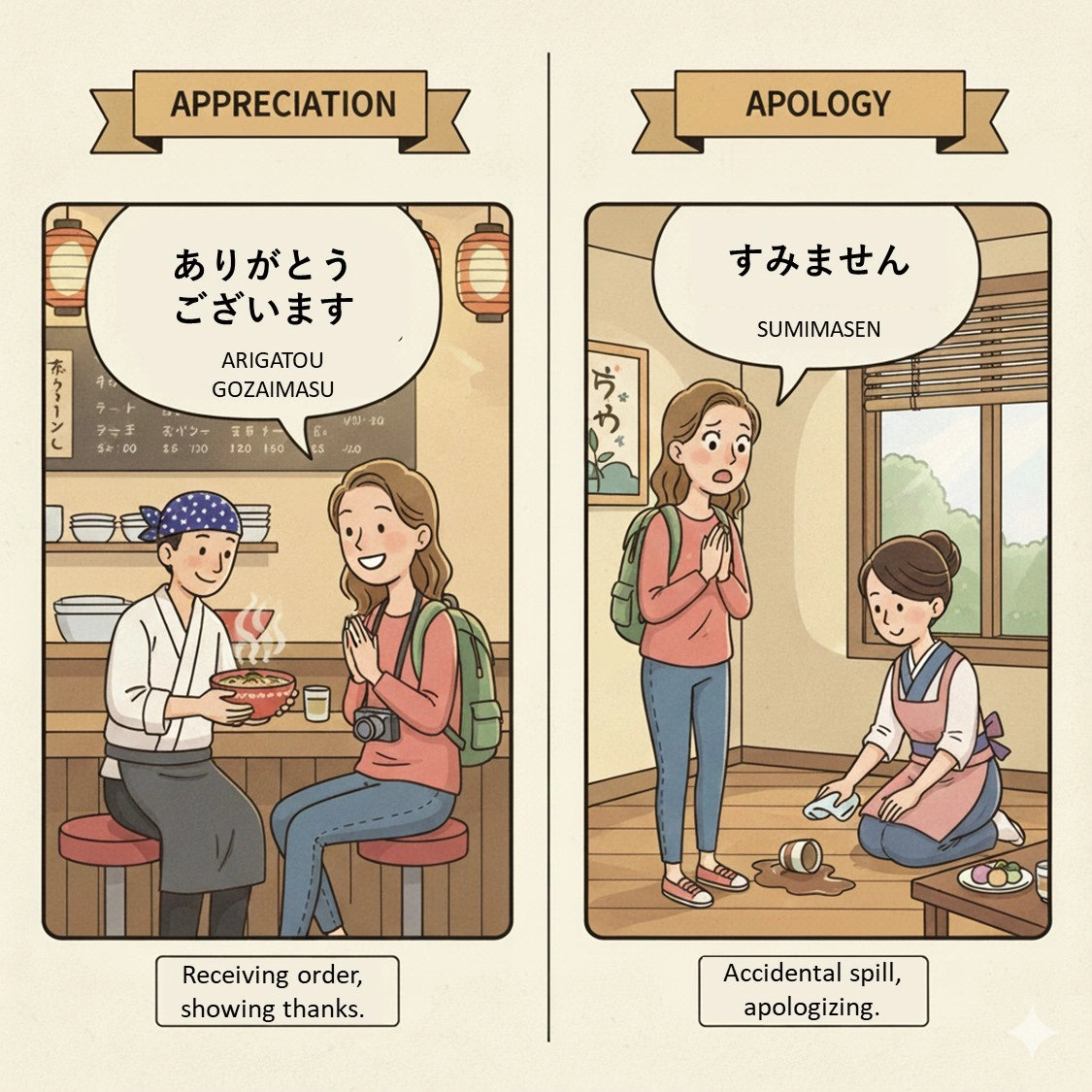
- A simple way to say you enjoyed the meal. You do not need a long speech; if you liked the ramen, oishii desu is enough. At a small shop, I like pairing it with arigatou gozaimasu when I leave.
Gochisousama deshitaEssential
- Japanese
- ごちそうさまでした
- Meaning
- Thank you for the meal
- Notes
- Gochisousama deshita is a common expression of thanks after a meal. You may say it when you finish eating or as you leave.
A Note on Ticket Vending Machines
Many ramen shops, especially busy ones, use a 券売機 (kenbaiki), a ticket vending machine near the entrance. You buy your meal ticket before sitting down. A few things worth knowing:
- Button layout varies by machine. If you are unsure, look for a menu photo, English label, or ask the staff. On some machines, the largest or most prominent button is a popular item, but treat that only as a clue, not a rule.
- Topping add-ons may appear as separate buttons. Look for words such as ajitama (seasoned egg) or chashu.
- Payment methods vary, so check the machine for cash, card, or other payment instructions before choosing your ticket.
- In many shops you hand the ticket to staff when you sit down; in others, you may leave it on the counter where they can collect it. Follow the shop's instructions.
7. Beyond Ramen: Keep Learning
Ramen vocabulary is a useful slice of the larger world of Japanese food language, and food language is one of the more practical reasons to learn Japanese before a trip. Once you can read katakana, a huge chunk of menu vocabulary becomes readable on sight, because Japanese uses katakana to write foreign loanwords. ビール (bīru) is beer. コーヒー (kōhī) is coffee. Even ラーメン (rāmen) is ramen.
If you want to go further (enough to read menus, navigate signs, or start to understand what people are saying to you), the gap between phrase-memorizing and actual comprehension is listening practice. The best way to build it before a trip is regular exposure to native Japanese content at a level you can follow along with.
Tools That Help Before You Board the Plane
A few things to consider depending on where you are in your Japanese:
- Learning kana: Knowing katakana makes many menu words easier to recognize, especially loanwords. Our Kana Challenge works through both hiragana and katakana with audio and timed quizzes. See our full kana learning guide if you want a structured approach.
- Building listening comprehension: Reading native Japanese content while listening to it read aloud trains your ear and vocabulary at the same time. YoMoo provides daily Japanese articles with TTS audio and instant word lookups: practical in short daily sessions.
- Structured grammar and fluency: If you want to go beyond phrases and actually build conversation ability, FluencyTool covers JLPT-focused content, shadowing exercises, and grammar activities with AI voice recognition.
Also worth reading: our guide to building Japanese vocabulary naturally and how immersive reading works as a learning method.
The Short Version
If you only remember a few words, remember these: katame for firmer noodles, kaedama for an extra serving of noodles, and gochisousama deshita when you finish. If a shop asks about customization and you do not know what to choose, futsuu de means “normal/default, please.” Everything else is there to help you read the menu and understand what a particular shop is offering.
More Japanese Travel Phrase Guides
Ramen is one useful situation. These related guides cover other moments when a few Japanese words can make a trip easier.
Survival Phrases
Useful phrases for greetings, ordering, directions, and everyday travel situations.
Read the guide →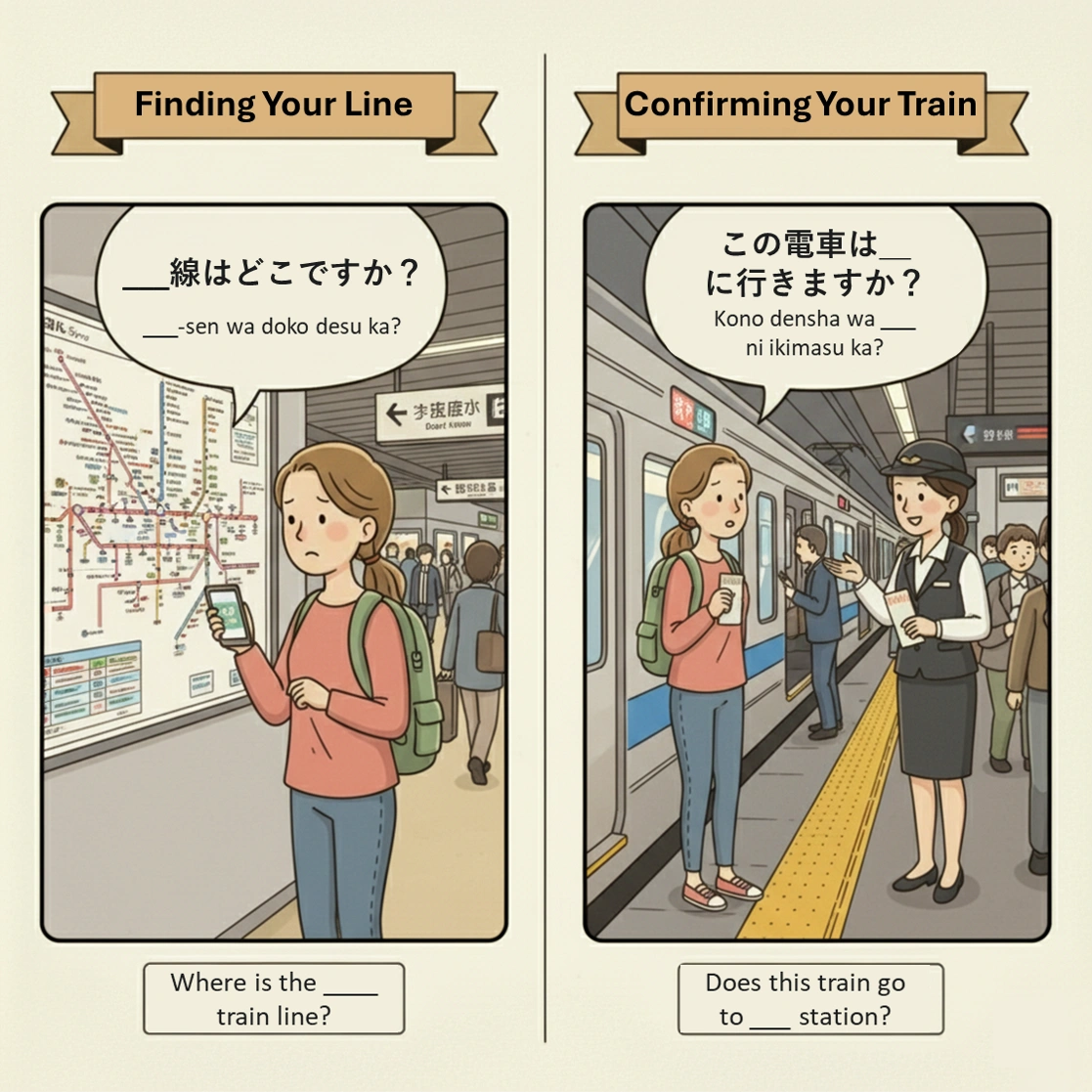
Transportation
Train, bus, IC card, and help-request vocabulary for getting around Japan.
Read the guide →