Echo Fluency
Hands-free speaking practice with native TTS and speech-to-text evaluation.
 ★ Free · iOS & Android · JLPT N5 → N1
A free Japanese speaking app built around Echo Fluency. A JLPT-graded sentence plays in a native voice, the microphone opens automatically, you repeat it, your recording plays back, and speech-to-text evaluates the attempt.
Choose JLPT N5 through N1 and work through five sub-levels at each level. Start with the speaking loop, then review what needs another pass.
No subscription, no trial, no card on file.
Romaji is available for the lowest N5 survival-phrase content. Above that entry point, you need to read hiragana and katakana. Kana Challenge teaches the kana first.
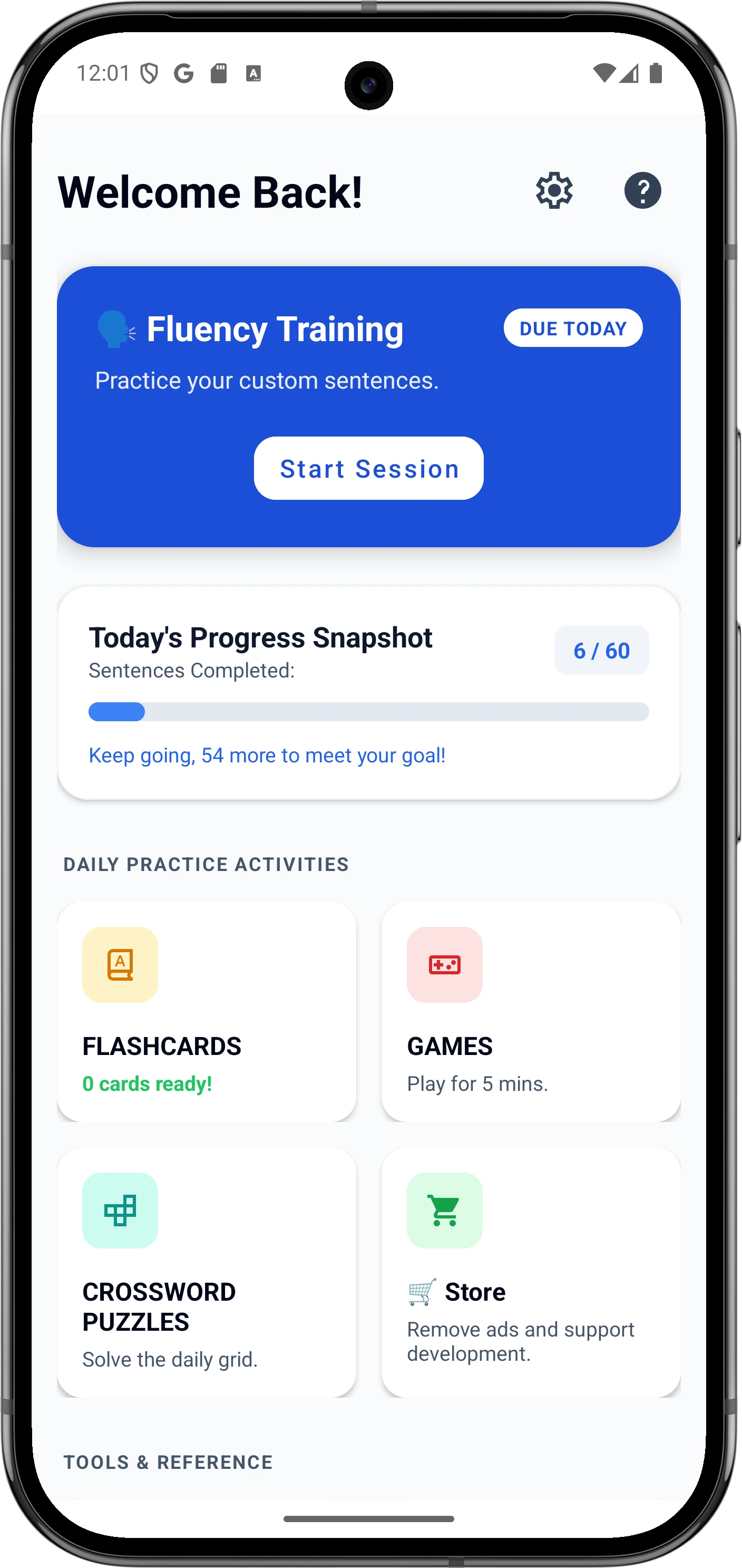
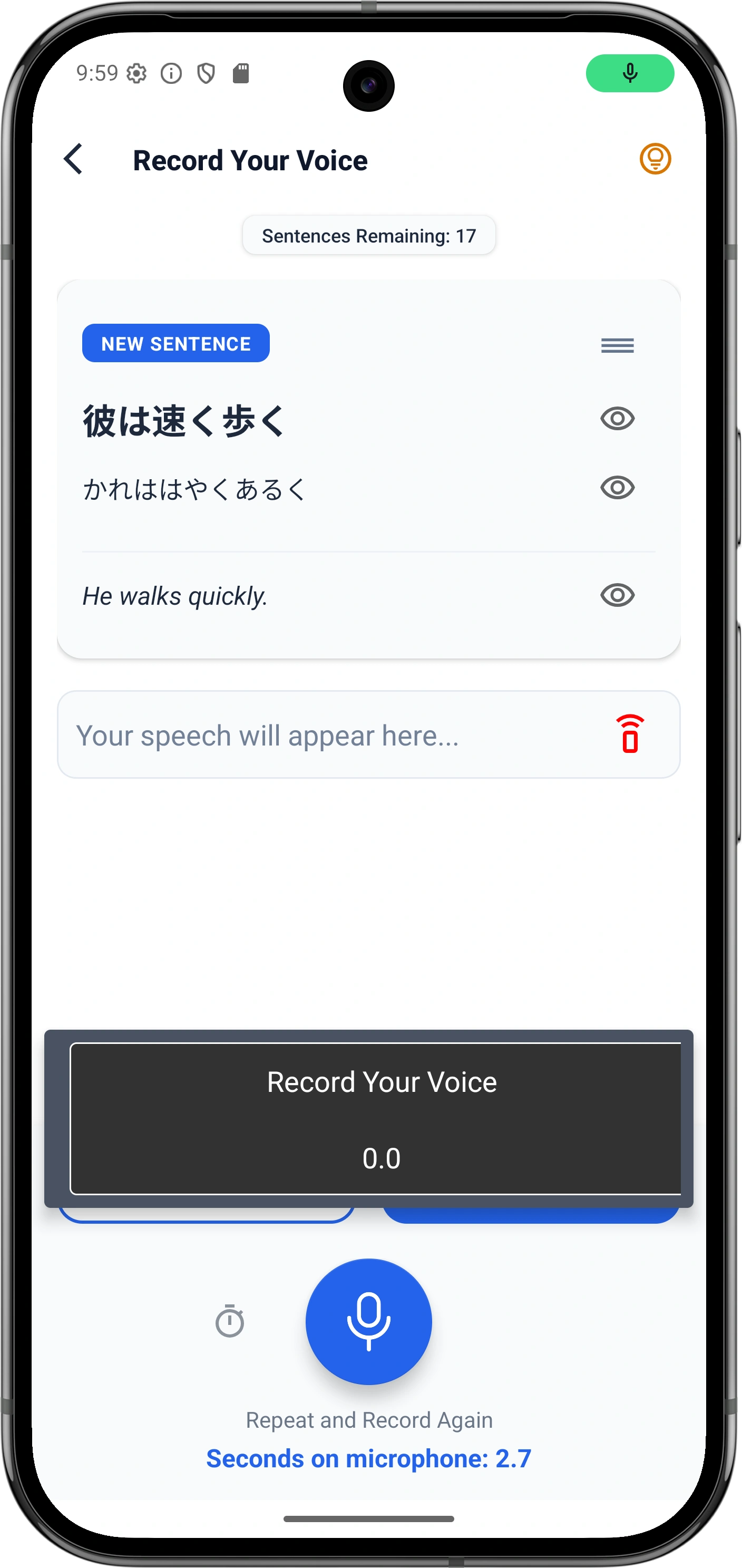
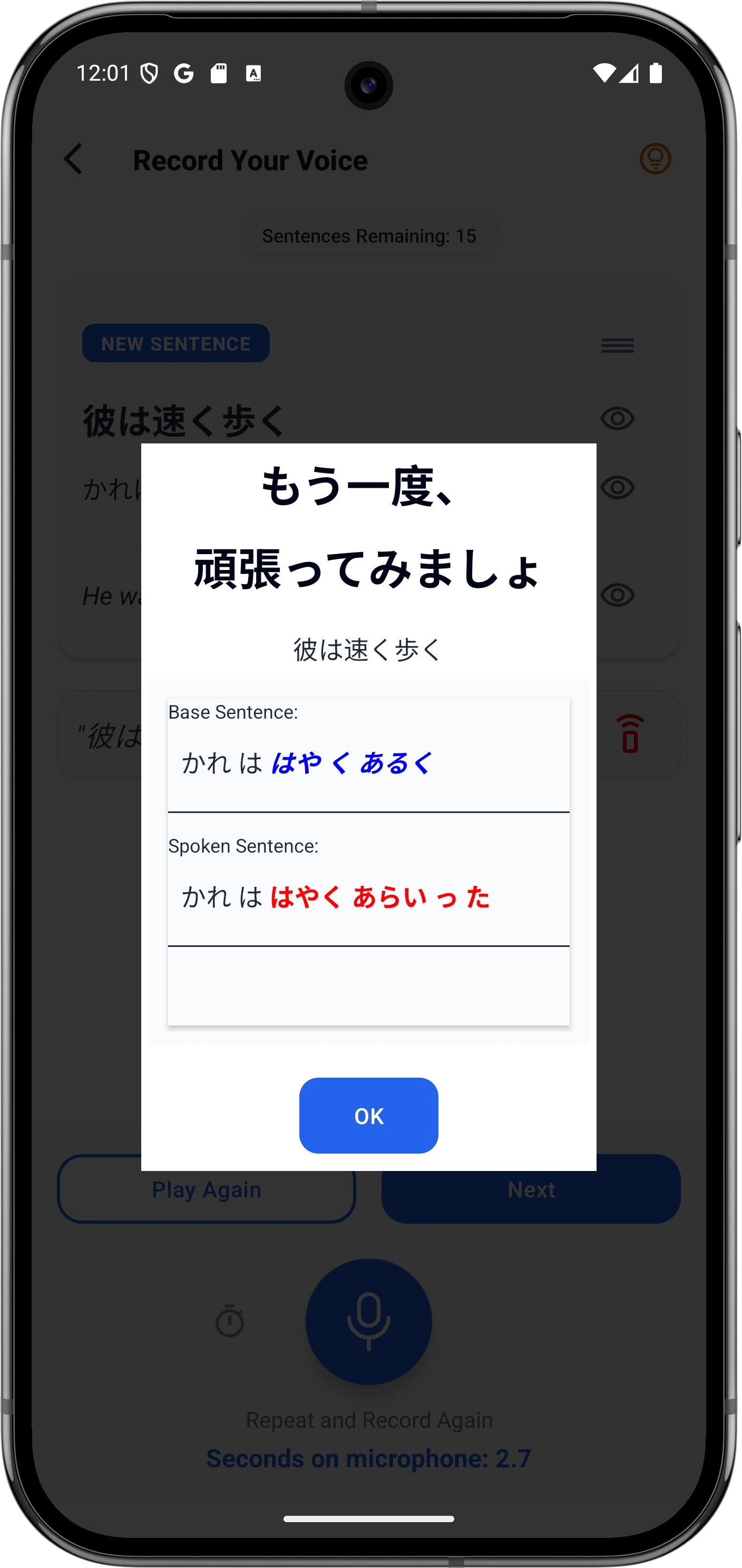
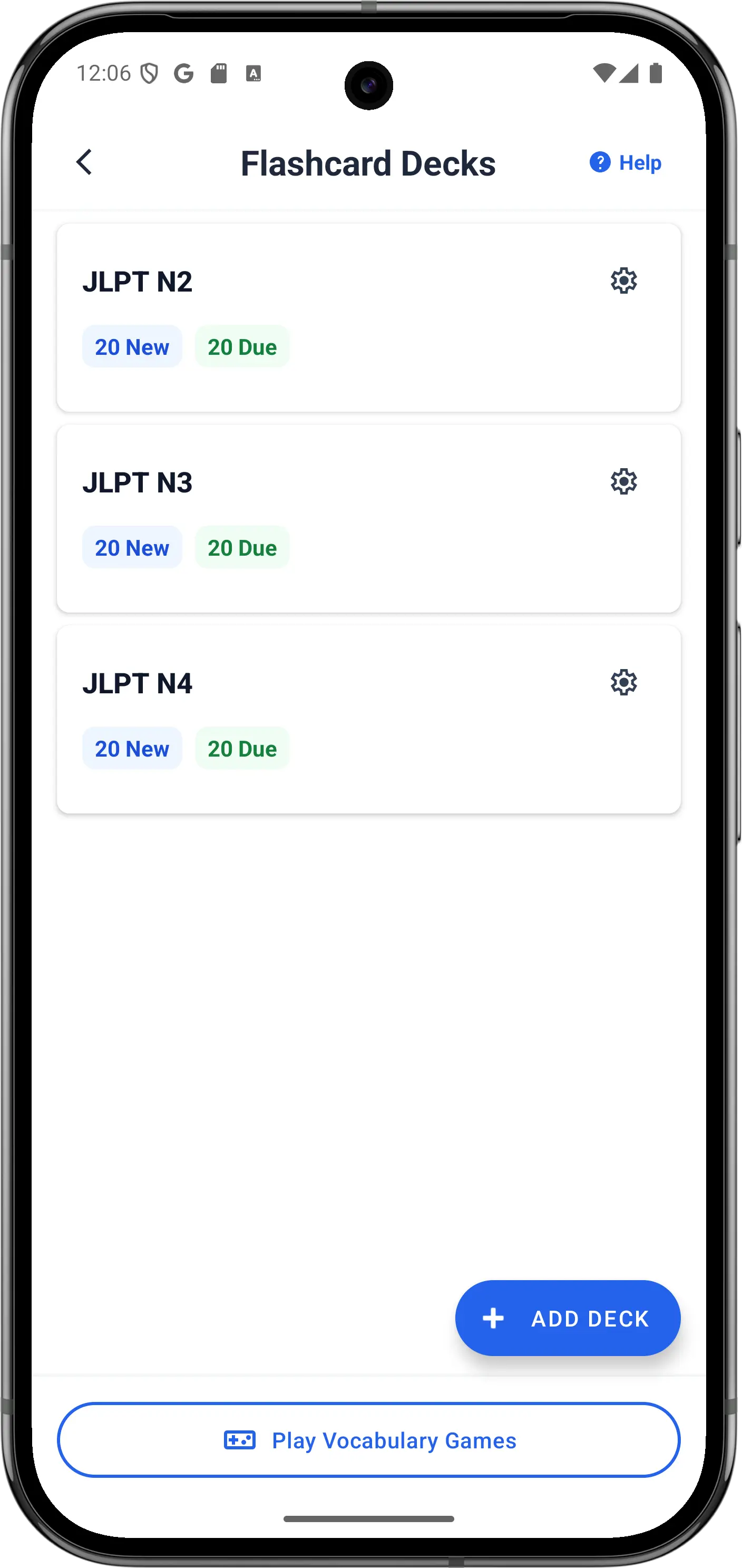
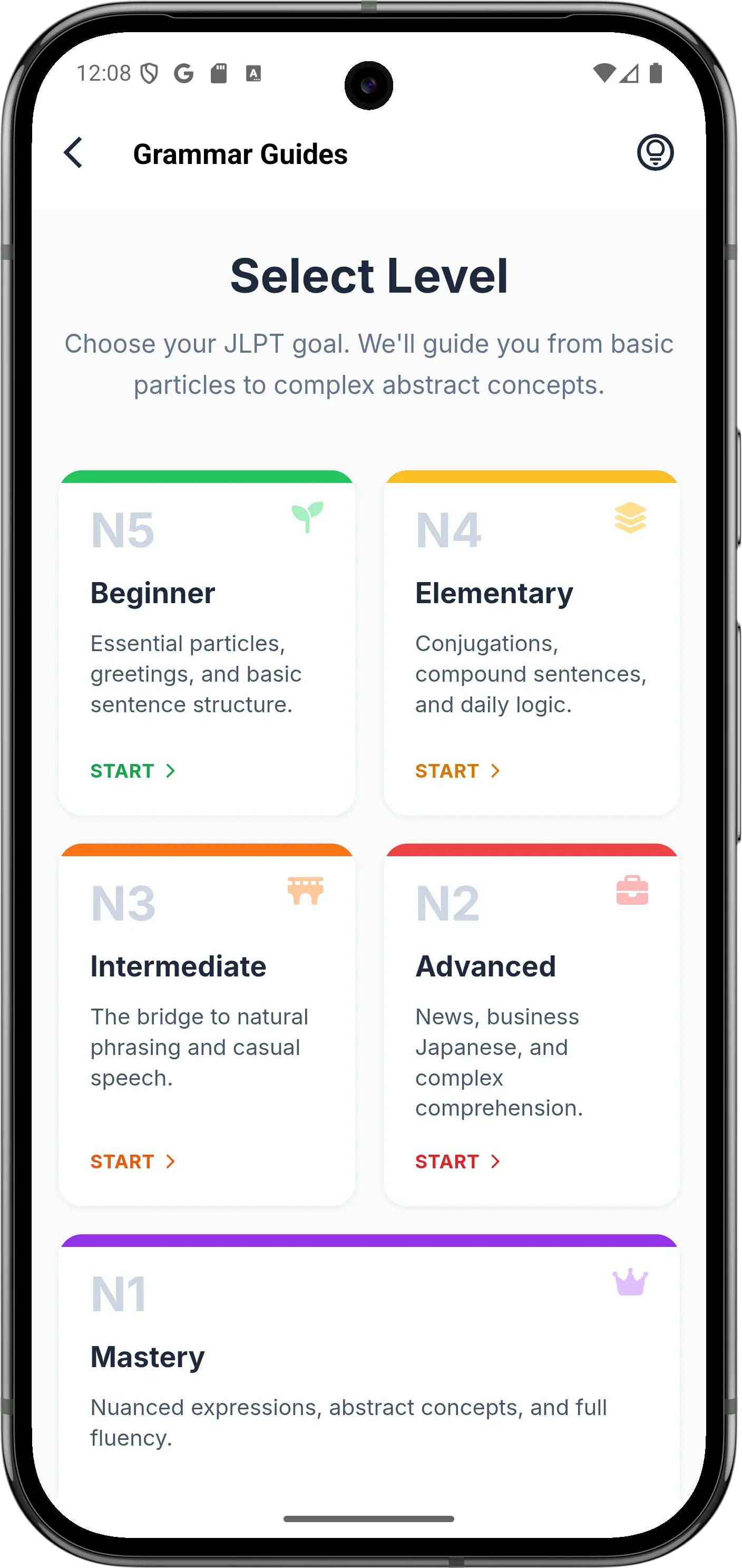
One speaking-first study loop, organized around the same graded content across the app.
Echo Fluency automates the listen → repeat → compare loop. Native audio plays, recording starts when playback ends, your voice plays back, and speech-to-text evaluates the attempt. A Purdue study of 30 intermediate Japanese learners found measurable changes in pausing patterns after a semester of shadowing; the study did not find faster delivery.
今日は天気がいいですね。
kyō wa tenki ga ii desu ne.
“The weather is nice today, isn't it?”
A JLPT-graded sentence appears with furigana above kanji. Google Cloud TTS plays it at your chosen speed.
The microphone opens automatically when playback ends, so the loop can run while your hands are busy.
Your recording plays immediately after the native model, making differences easier to hear.
Speech-to-text transcribes the attempt and compares it with the target. Incorrect sentences re-queue in the same session.
Mastering a sentence five times multiplies its speaking review interval by 4.
The JLPT's official level descriptions cover reading and listening. FluencyTool uses those same N5-N1 levels to organize speaking practice instead.
Read the shadowing guide →Choose one of the five official JLPT levels, then work through five FluencyTool sub-levels inside it. That creates 25 content buckets for speaking practice.
5 sub-levels · complex grammar & literary forms
5 sub-levels · nuanced expression & reading fluency
5 sub-levels · everyday conversation & conjunctions
5 sub-levels · basic sentences & common patterns
5 sub-levels · foundational vocabulary & survival phrases
The lowest N5 survival-phrase content includes romaji. Beyond that entry point, the course expects hiragana and katakana; furigana can appear above kanji.
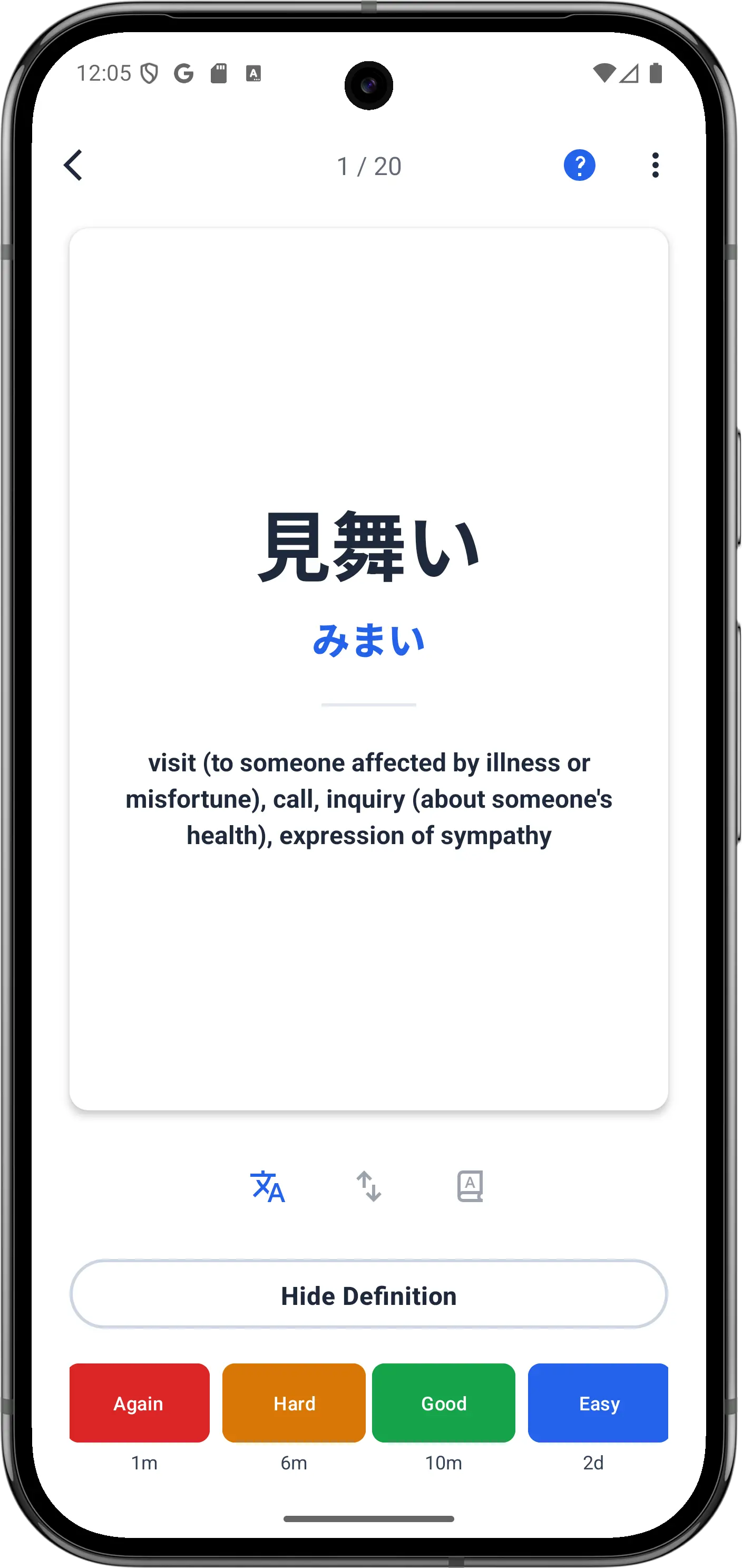
Flashcards use Woźniak's original SM-2 description. Rate a card Again, Hard, Medium or Easy and its interval and ease factor adjust accordingly.
Resets to Learning. Short interval. Ease drops.
Interval shrinks. Stays in Learning. Ease drops.
Standard SM-2: previous interval multiplied by the ease factor.
Interval extends beyond standard. Ease factor rises.
After five or more correct reviews a card is treated as mature and moves to multi-week intervals.
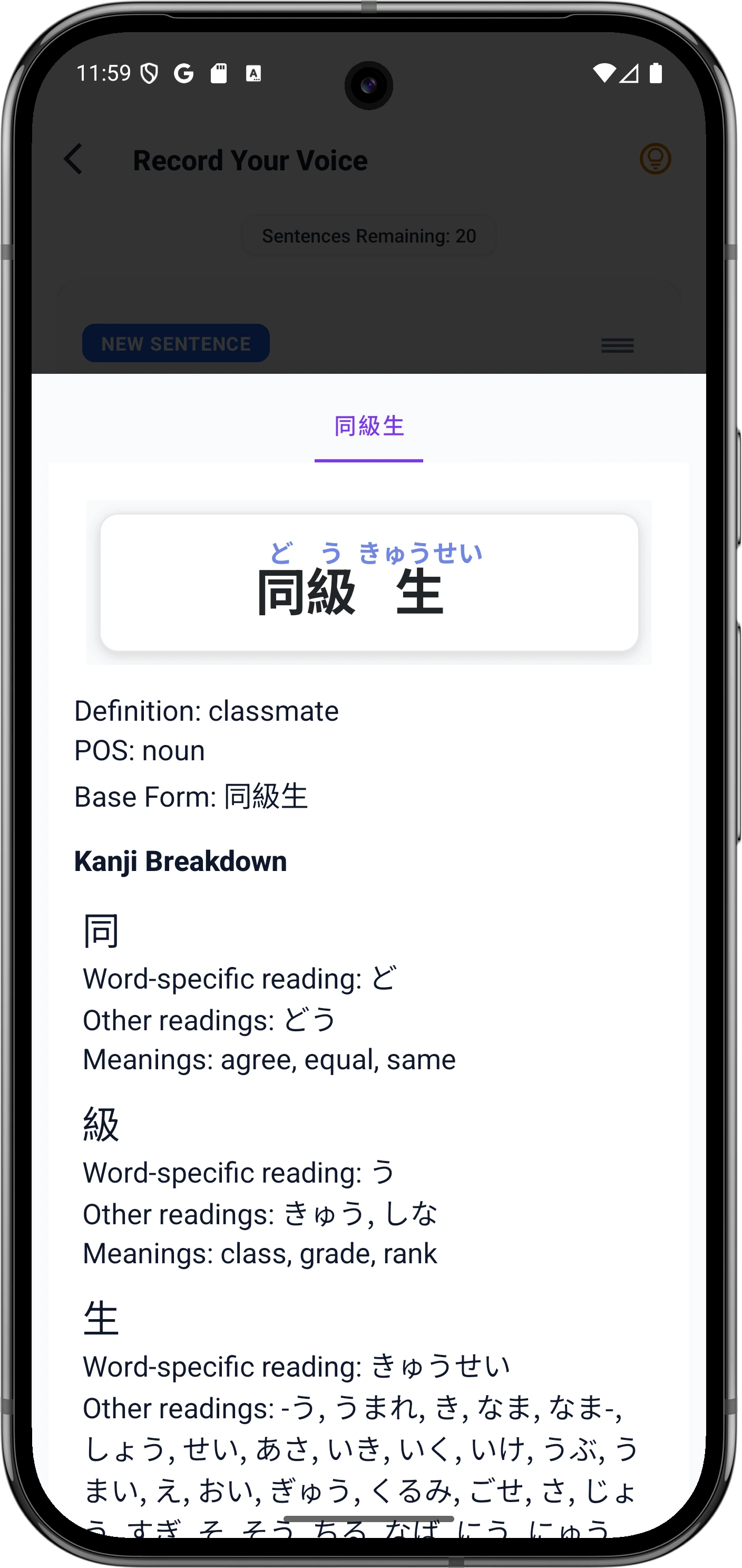
Long-press a Japanese word to open a breakdown sheet. Kuromoji supplies the morphological parse and reading; KanjiAPI.dev supplies character data. The same parser powers the free Japanese Analyzer.
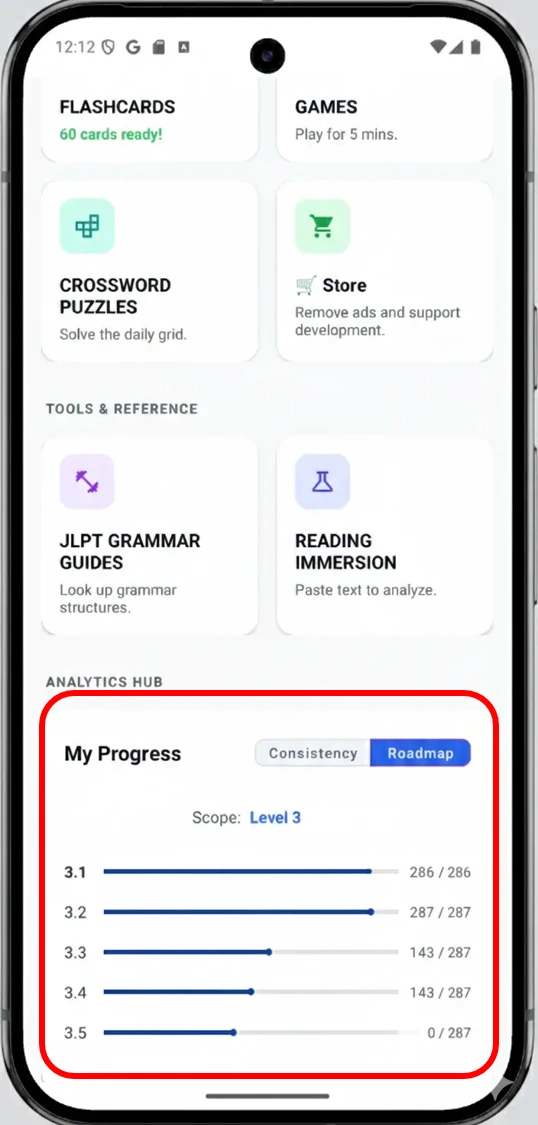
The dashboard keeps the daily decision small: sentences completed against your goal, flashcards due now, and your position across the 25 sub-levels.
Sentences completed against the target you set.
The flashcards that need review now.
Your current sub-level and the remaining new sentences ahead.
Activity history, reminders, session settings and Firebase cloud sync stay available without competing with the three numbers that drive the next session.
Speaking is the main loop. The supporting tools reuse the same JLPT-graded vocabulary, grammar and level structure.
Hands-free speaking practice with native TTS and speech-to-text evaluation.
JLPT N5 through N1 patterns, native audio, examples and quizzes. Browse the web library.
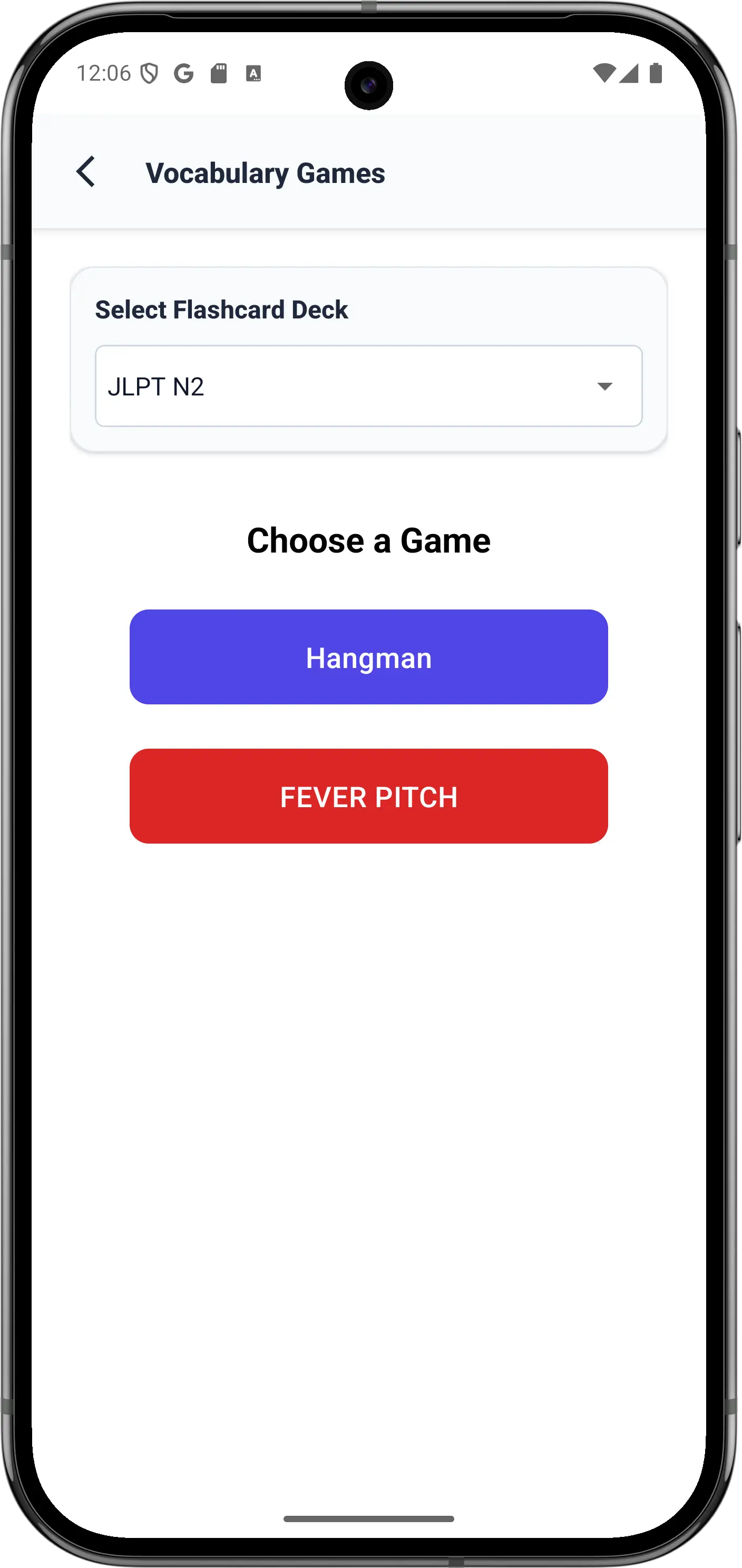
Speed Tap, matching and Fever Pitch built from the same active word lists.
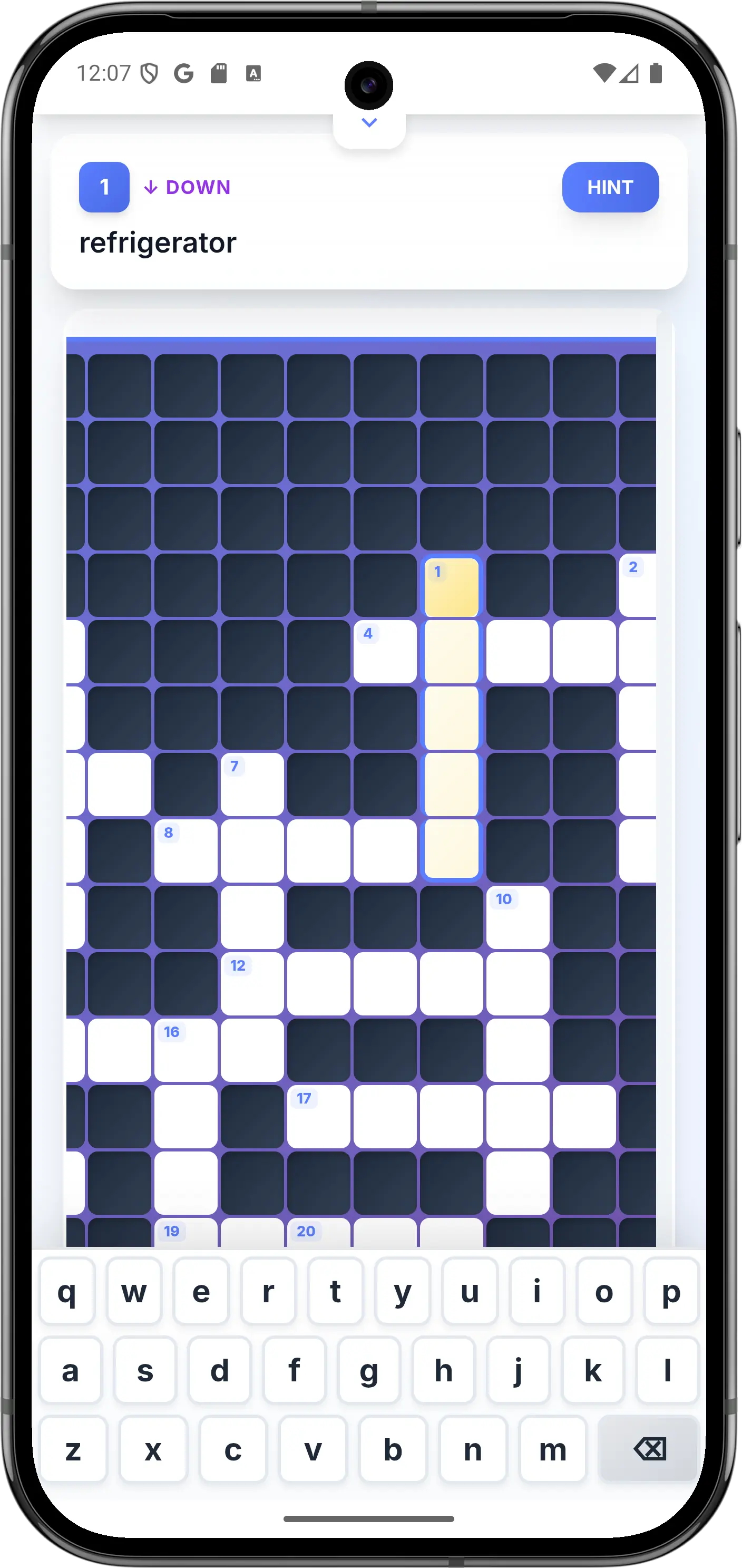
Japanese vocabulary puzzles using the same JLPT-graded decks.
Start at N5 Sub-level 1. The lowest survival-phrase content includes romaji; beyond that, the course expects hiragana and katakana, with furigana above kanji where available.
Vocabulary, grammar and sentences are filtered by level. The JLPT itself measures reading and listening, while FluencyTool adds a speaking practice loop.
Echo Fluency is built around repeated native audio, immediate recording playback and speech-to-text evaluation. Pair it with JLPT-graded news reading for written input.
Romaji is available at the lowest N5 survival-phrase entry point. For content above that, you need to read hiragana and katakana. Kana Challenge teaches the kana first.
Start with Kana ChallengeThe core app is free to download and use. There is no trial, no card on file and no recurring subscription.
Echo Fluency, flashcards, grammar guide, vocabulary games and crosswords.
A single one-time in-app purchase removes banner ads permanently.
These screens show the speaking loop, evaluation, review system, grammar content, games and roadmap described above.
“Really good app for speaking Japanese! Listen to each phrase and repeat it, and thanks to the text-to-speech, the app checks your pronunciation.”Google Play review
“I really enjoy this app a lot and I cannot believe it is free. TIP: Hold your finger on a kanji and it explains each one.”Google Play review
“Best support I ever received. The mic wasn't working properly and the dev fixed it almost immediately. Amazing app for shadowing!”Google Play review
These companion tools use the same JLPT-graded material and support different parts of the learning workflow.
Hiragana and katakana practice before FluencyTool.
The N5 to N1 grammar guide on the web with audio and quizzes.
JLPT-graded news reading using related vocabulary.
A larger set of JLPT-vocabulary crosswords from the same word lists.
Free on iOS and Android. Pick a JLPT level in the onboarding wizard and start your first session.
⬇Download the Free App