Japanese learning guides and Japan travel phrases.
My Senpai Insights is a free library of 42 practical guides: kana and kanji, Japanese grammar you can use, study methods backed by research, and phrases for your trip to Japan.
Most read
from search, last 90 days- 1

Why People Quit Duolingo: 10 Reasons and What to Do Instead
Streak anxiety, gamification limits, and what to add when you need more than one app.
- 2
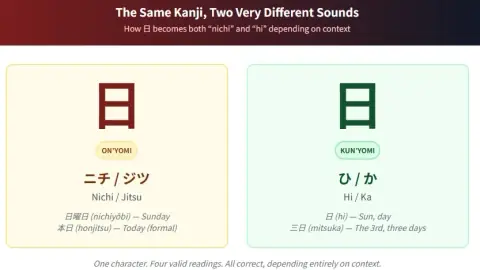
Onyomi vs. Kunyomi: A Practical Guide
What on'yomi and kun'yomi are, where they came from, when to use each, and how to stop guessing every time you encounter a new kanji.
- 3

25 Hotel Phrases
Check-in, room requests, and handling problems at your accommodation.
- 4
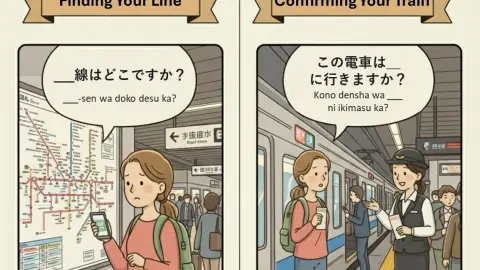
25 Transportation Phrases
Trains, buses, taxis, and navigating Japan's transit system.
- 5
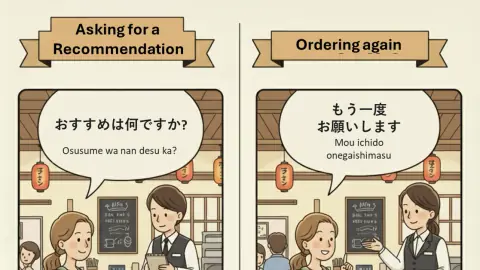
25 Restaurant Phrases
Reservations, ordering, dietary needs, and asking for the bill.
- 6
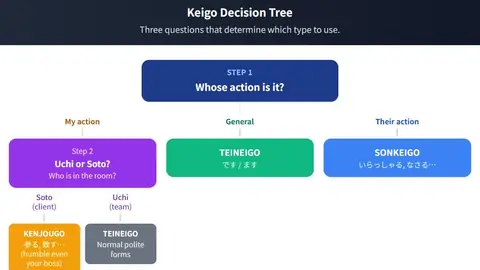
Japanese Keigo (Honorific Language) Explained
Sonkeigo, Kenjougo, and Teineigo with clear examples, decision trees, and reference charts for all levels.
New to Japanese? Start here
Learning Japanese
Start from zero
9 articlesKana, first readings and a plan for what comes next.
Kana Quiz: Free Hiragana and Katakana Test
See a character, give its sound. 20 questions a round, with your misses listed at the end.
Best Apps to Learn Hiragana and Katakana
Seven kana apps compared on writing practice, mnemonics, quizzes and price, plus a 10-character test.
Hiragana vs. Katakana: When to Use Which
Same sounds, different jobs. The rule for which script a word uses, and the exceptions that trip up beginners.
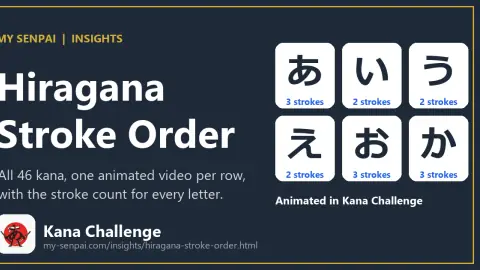
Hiragana Stroke Order: Every Row, Animated
All 46 basic hiragana, one animated video per row, with the stroke count for every kana and the look-alikes to watch.
After Hiragana and Katakana: Your Japanese Learning Roadmap
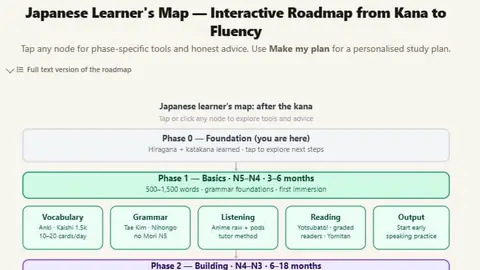
You finished the kana. Now what? Vocabulary, kanji, grammar, textbooks, and how to build a study routine that lasts.
Japanese Learner's Map: Interactive Roadmap from Kana to Fluency
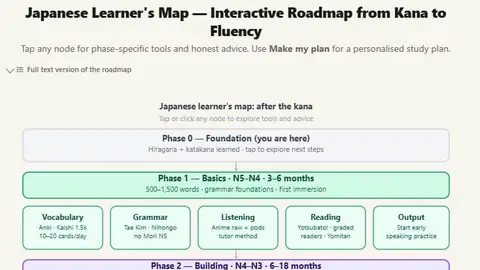
A full stage-by-stage roadmap from kana to JLPT N1 with an interactive map and quick level quiz.

Learn Hiragana and Katakana, or Get Left Behind
Fast-track your kana learning, stop relying on romaji, and discover what to study next.
Japanese Learners' Top 10 Questions, Answered
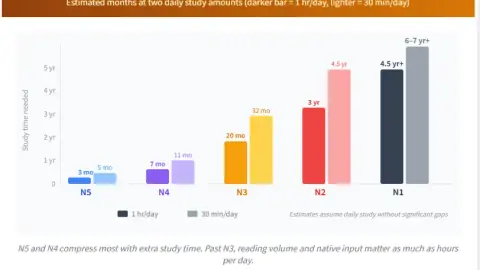
Methods, resources, apps, and study tips: common beginner questions with direct answers.
Hiragana and Katakana Charts
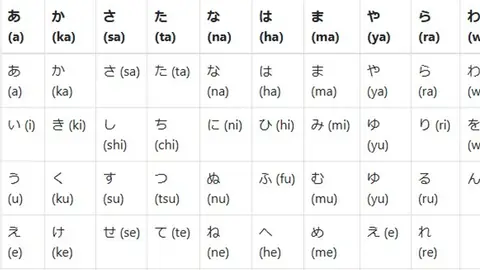
Reference charts for every hiragana and katakana character, with practice.
Japanese grammar and kanji
11 articlesVerb forms, particles, keigo and why kanji have several readings.
Wa vs Ga (は vs が): When to Use Each
The core rule, five cases where が is required, ni vs de, and a 10-question quiz.

Homebrewed Nihongo: A DIY Guide to Japanese Language Tech
What it takes to parse, look up, and render Japanese text in the browser with no backend: segmentation, furigana generation, and OCR tradeoffs.

Common Ichidan Verbs in Japanese: Full List with Conjugation Tables
Ichidan verbs sorted by daily routine, thought, and giving/receiving, plus the eru/iru verbs that only look ichidan and the homophone pairs that trip learners up.
Japanese Keigo (Honorific Language) Explained
Sonkeigo, Kenjougo, and Teineigo with clear examples, decision trees, and reference charts for all levels.
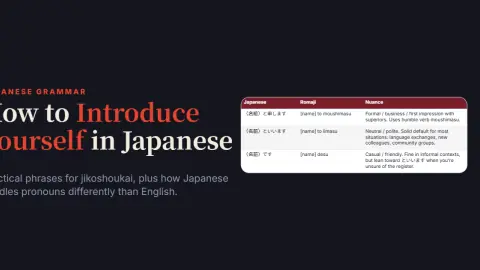
How to Introduce Yourself in Japanese & Refer to Others
Master jikoshoukai with phrase-by-phrase guidance, a plain explanation of how pronouns work, and full examples for casual, university, and business settings.
Onyomi vs. Kunyomi: A Practical Guide
What on'yomi and kun'yomi are, where they came from, when to use each, and how to stop guessing every time you encounter a new kanji.
What Is Furigana and How to Read Japanese With It
Switch furigana on, off or to hover in a sample passage, and learn when to stop relying on it.

Japanese Verb Conjugation: Godan, Ichidan, and Irregular Verbs
How to identify and conjugate the three verb groups, the stem every other conjugation builds from, and the eru/iru exceptions that trip learners up.
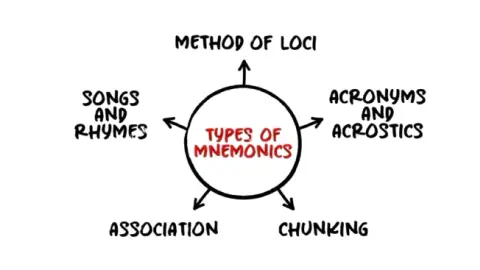
Comprehensive Guide to Building Japanese Vocabulary
Peer-reviewed research on spaced repetition , sentence mining, frequency lists: a full breakdown of how to build vocabulary that actually sticks.
JLPT N5 Vocabulary List With Audio
All 614 N5 words with reading, meaning and audio. Search, hide the meanings to test yourself, or download the CSV.
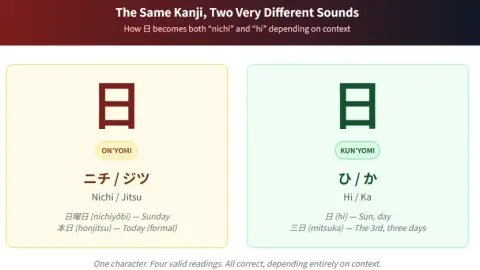
Why Does One Kanji Have So Many Readings?
How onyomi, kunyomi, compounds, okurigana and word history decide which reading a kanji takes, with examples.
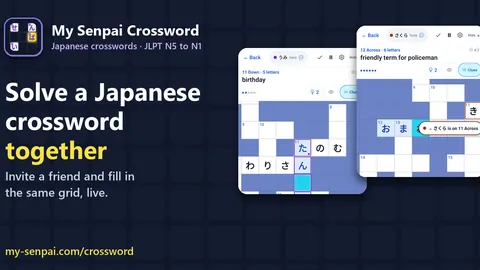
Two-Player Japanese Crossword (Together Mode)
Practise JLPT vocabulary with a friend: share a link or a 6-character code and fill in the same N5 to N1 grid live.
How to study Japanese
16 articlesMethods and research: shadowing, spaced repetition, reading, and why people quit apps.
How to Learn Japanese With AI: Prompts That Work and What to Check
Five copyable prompts for practice and corrections, and what to double-check in a chatbot’s answers.
How to Do Shadowing in Japanese: A 10-Minute Daily Routine
Five steps and six practice sentences with audio at normal and slow speed.
Japanese Speaking Practice Apps Compared
Six apps compared on how you speak, the feedback you get, price and platforms.
Duolingo Alternatives for Learning to Speak Japanese
What replaces each part of Duolingo for speaking, seven apps compared, and a three-question chooser.

Best Japanese Reading Apps for Beginners (2026 Comparison)
YoMoo, Satori Reader, LingQ, NHK News Web Easy and Renshuu compared on price, furigana, lookups and level, plus a 10-minute daily routine.
JLPT N3 Reading Practice: Apps and Methods (2026)
What the N3 reading section tests, which tools build reading volume, the exam methods that matter, and a four-week plan.

Why Read Real Japanese Instead of a Graded Textbook
What textbooks can't teach you, and why "authentic" doesn't have to mean "unedited."
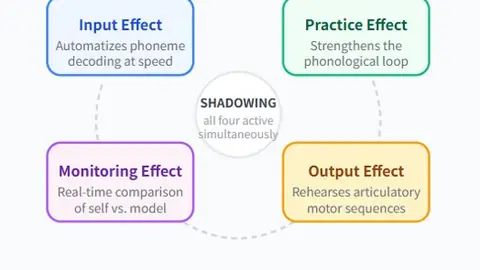
Shadowing for Language Learning: What the Research Actually Shows
What neuroscience and classroom research actually say about shadowing: fluency gains, listening comprehension limits, and prosody training.
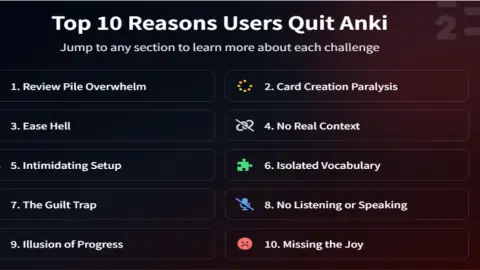
Why People Quit Anki: An Analysis of User Frustration
Review pile overwhelm, ease hell, card creation fatigue, guilt cycles: what causes dedicated learners to walk away from Anki, with evidence-backed fixes.
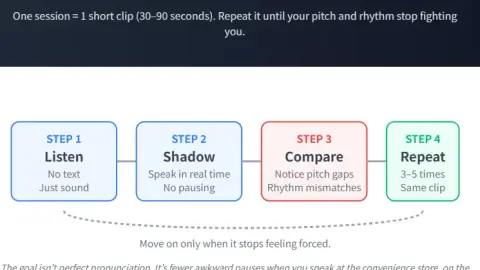
A Beginner's Guide to Japanese Speaking Practice
Common speaking challenges, confidence-building techniques, and how to build a practice routine that doesn't require a tutor on day one.

Making the Most of Immersive Japanese Reading
How authentic texts deepen vocabulary, grammar, and cultural understanding, and how to pick material at the right level.
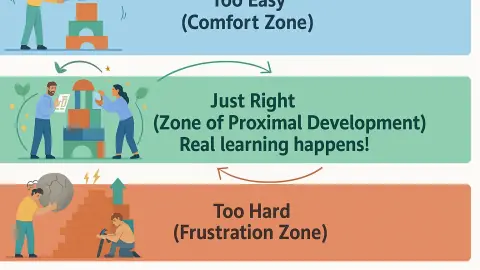
The Zone of Proximal Development and Language Learning
Vygotsky's original ZPD definition , explained in plain terms: how to find the challenge level that accelerates fluency instead of stalling it.
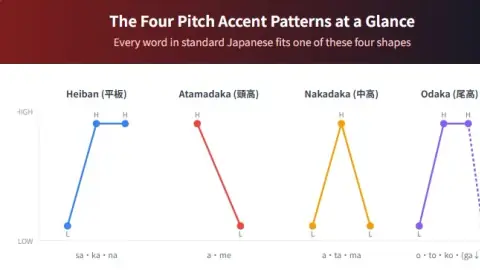
A Practical Guide to Japanese Pitch Accent
What pitch accent is, how important it actually is, and a practical approach to improving it without letting it derail your broader study.
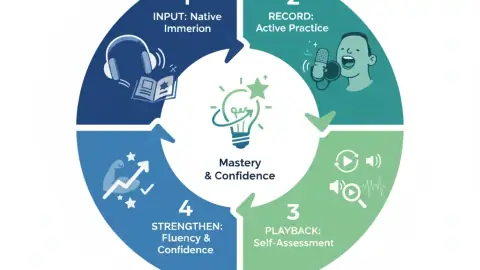
Building Speaking Fluency with the EchoFluency Cycle
A four-step method combining listening, shadowing, and output to build real speaking confidence.
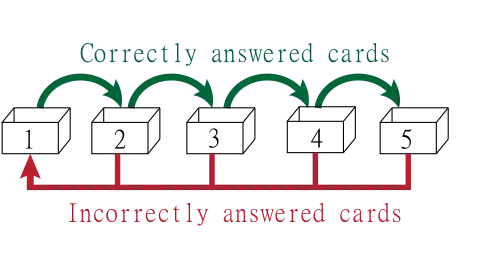
Exploring the Roots of Spaced Repetition: The Leitner System
The foundational SRS method that Anki is built on, explained clearly, with notes on deliberate use.
Why People Quit Duolingo: 10 Reasons and What to Do Instead
Streak anxiety, gamification limits, and what to add when you need more than one app.
Traveling in Japan
Japanese phrases for your trip
8 articlesReady-to-say Japanese for hotels, trains, restaurants, ramen shops and konbini, plus the announcements you will hear.
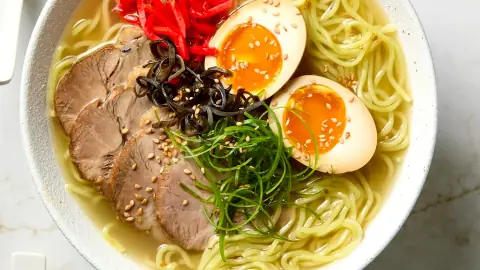
Japanese Ramen Words: A Menu Dictionary
62 words from ramen menus and ticket machines with kana, meaning and audio: noodle firmness, kaedama, toppings, broths and how to order.

What to Say Before and After Eating in Japan
Itadakimasu, gochisōsama deshita, how to compliment food and what to say when you leave a restaurant, with audio.
Japanese Train Announcements, Explained Line by Line
Tsugi wa, mamonaku, kono densha wa: nine train, platform, Shinkansen and bus announcements with romaji, English and audio.

Japanese Konbini Phrases: What the Clerk Asks You
Every question at a convenience store register, in order, the two answers that cover them, and the katakana on the shelves.
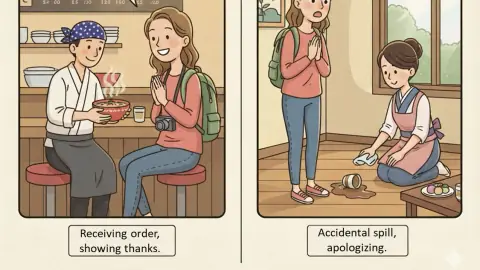
20 Essential Phrases for Travelers
Greetings, asking directions, ordering food, and getting through daily situations.
25 Restaurant Phrases
Reservations, ordering, dietary needs, and asking for the bill.
25 Hotel Phrases
Check-in, room requests, and handling problems at your accommodation.
25 Transportation Phrases
Trains, buses, taxis, and navigating Japan's transit system.
Japan places and culture
5 articlesNeighborhoods, rainy days, useful apps and words that do not translate.
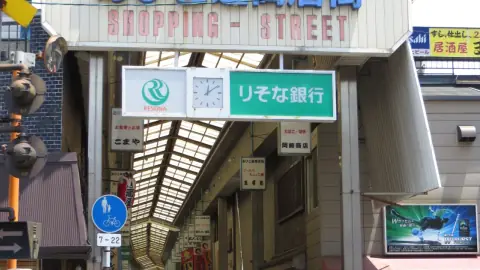
10 Local Osaka Experiences Most Tourists Miss
Nishinari, Tsurumi Ryokuchi, Senbayashi, a neighborhood sento, an old kissaten and a supermarket dinner: ten ways to see everyday Osaka. Guest post by Reiji Tatara of TabiTrace.
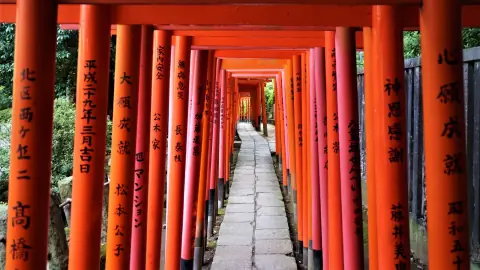
10 Non-Touristy Tokyo Neighborhoods Worth Fitting Into Your Itinerary
Off the main circuit. Near things you're already visiting. None of them require a queue. Honest crowd ratings, best timing, and nearest stations.

Tokyo on a Rainy Day: What to Do When the Weather Doesn't Cooperate
Museums, covered arcades, underground malls, and the venues that are actually better in the rain. A practical list across the city.

Japan Travel Apps That Actually Matter (2026)
Jorudan vs Google Maps, Tabelog's rating scale, real GO and Uber taxi fees, Suica on your phone, PayPay's tourist limit, and the one app worth installing before an earthquake.
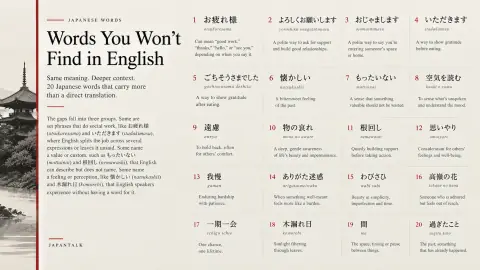
Japanese Words With No English Equivalent
Twenty Japanese words and phrases that are hard to translate cleanly, from お疲れ様 and よろしくお願いします to もったいない and 懐かしい.
No articles match that search.
Common questions
Where should I start learning Japanese from zero?
Start with hiragana and katakana. The kana guide explains why to stop relying on romaji, hiragana stroke order shows every row, and After Hiragana and Katakana covers vocabulary, kanji, grammar and a study routine for what comes next.
Should I learn hiragana or katakana first?
Learn hiragana first. It covers native grammar such as particles and verb endings and appears far more often in beginner material; katakana follows soon after for loanwords. Hiragana vs. katakana explains which script a word uses.
What is the difference between on'yomi and kun'yomi?
On'yomi is the reading that came from Chinese and is used mostly in compounds such as 電車, and kun'yomi is the native Japanese reading, used with okurigana as in 食べる. The on'yomi and kun'yomi guide has a chart, clues and exceptions.
What Japanese phrases do I need for a trip to Japan?
Start with the 20 essential phrases for travelers (greetings, directions, ordering food), then the 25-phrase guides for hotels, trains, buses and taxis and restaurants. For what you will hear rather than say, see train announcements, konbini phrases and what to say before and after eating.
Why do people quit Duolingo?
Common reasons include streak anxiety and the limits of gamification. Why People Quit Duolingo lists ten reasons, what the app does well, and how to build a broader study plan.
Does shadowing work for learning Japanese?
Research on shadowing reports gains in areas such as fluency and prosody, with limits for listening comprehension. Shadowing for Language Learning summarizes a 2025 systematic review of 44 studies in plain English.
Is spaced repetition with Anki worth it?
Spaced repetition works for many learners, but people often quit Anki over review pile overwhelm, ease hell and card-creation fatigue. Why People Quit Anki covers evidence-backed fixes, and the Leitner system explains the method Anki is built on.
Read in your language
29 articles are also available in other languages.
Deutsch 7
- On’yomi und Kun’yomi: Unterschiede, Regeln & Beispiele
- Sich auf Japanisch vorstellen: Der komplette Leitfaden
- Warum viele Duolingo aufgeben: 10 Gründe und Alternativen
- Japanisch für Reisende: Die 20 wichtigsten Sätze
- Japanisch im Restaurant: 25 wichtige Sätze zum Bestellen
- Japanisch im Hotel und Ryokan: 25 wichtige Sätze
- Japanisch für Zug und Bus: 25 wichtige Sätze
Français 7
- On’yomi et kun’yomi : différences, règles et exemples
- Se présenter en japonais : le guide complet du débutant
- Arrêter Duolingo ? 10 raisons et que faire à la place
- 20 phrases japonaises indispensables pour voyager
- Japonais au restaurant : 25 phrases pour commander
- Japonais à l’hôtel : 25 phrases utiles pour votre séjour
- Japonais dans le train et le bus : 25 phrases utiles
Español 7
- On’yomi y kun’yomi: diferencias, reglas y ejemplos
- Presentarse en japonés: guía completa para principiantes
- Por qué la gente deja Duolingo: 10 razones y qué hacer
- 20 frases en japonés para viajar a Japón
- Japonés en el restaurante: 25 frases útiles
- Japonés en el hotel y el ryokan: 25 frases útiles
- Japonés para el tren y el autobús: 25 frases útiles
Português (Brasil) 2
Written by the My Senpai team, who also make the Kana Challenge, FluencyTool, YoMoo and JLPT crossword apps. Follow along on YouTube, X and Instagram.