Understanding Hiragana and Katakana
What Are Hiragana and Katakana?
Together, they're called kana — two parallel phonetic
scripts, each with 46 base characters.
Hiragana handles native Japanese words and
grammatical endings (the す, き, た type stuff you'll see
constantly). Katakana is used for foreign
loanwords, scientific terms, and the occasional stylistic
emphasis. You need both. There's no shortcut where you just
learn one.
For the full rule on which script a given word actually uses,
and the exceptions that trip up beginners, see
hiragana vs. katakana: when to use which.
The Gojūon Chart
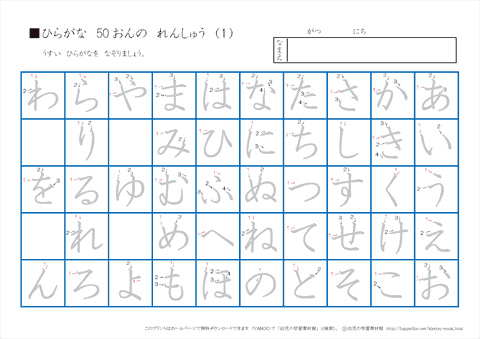
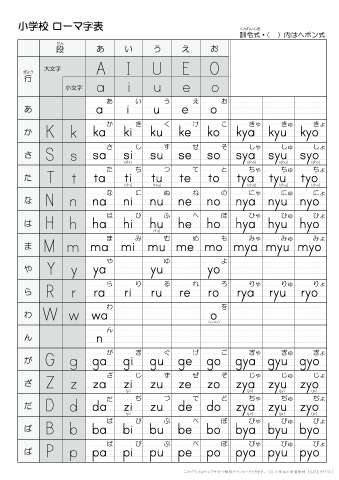
The kana are organized into the gojūon — a phonetic
grid of five vowels (a, i, u, e, o) crossed with a set of
consonants (k, s, t, n, h, m, y, r, w). Once you understand the
grid structure, you're not memorizing 46 random symbols. You're
memorizing a table with a predictable pattern. That said, a few
characters break the rules anyway, because Japanese.
Hiragana Chart
Tap a character to hear its pronunciation.
A
I
U
E
O
あa
いi
うu
えe
おo
かka
きki
くku
けke
こko
さsa
しshi
すsu
せse
そso
たta
ちchi
つtsu
てte
とto
なna
にni
ぬnu
ねne
のno
はha
ひhi
ふfu
へhe
ほho
まma
みmi
むmu
めme
もmo
やya
ゆyu
よyo
らra
りri
るru
れre
ろro
わwa
をwo
んn
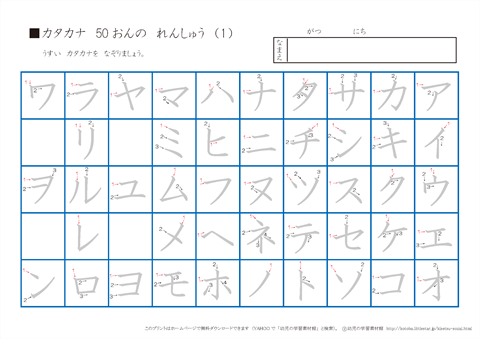
Katakana Chart
A
I
U
E
O
アa
イi
ウu
エe
オo
カka
キki
クku
ケke
コko
サsa
シshi
スsu
セse
ソso
タta
チchi
ツtsu
テte
トto
ナna
ニni
ヌnu
ネne
ノno
ハha
ヒhi
フfu
ヘhe
ホho
マma
ミmi
ムmu
メme
モmo
ヤya
ユyu
ヨyo
ラra
リri
ルru
レre
ロro
ワwa
ヲwo
ンn
Pitch Accent
Japanese doesn't use stress accent the way English does — it
uses pitch accent, where the same word can mean
different things depending on which syllable is high or low.
はし (hashi), for instance, is either
"bridge" (Low-High) or "chopsticks" (High-Low). This is
invisible in Romaji and present in kana. Our
Guide to Pitch Accent
covers it in more depth.