Frequently Asked Questions
What is the correct stroke order for hiragana?
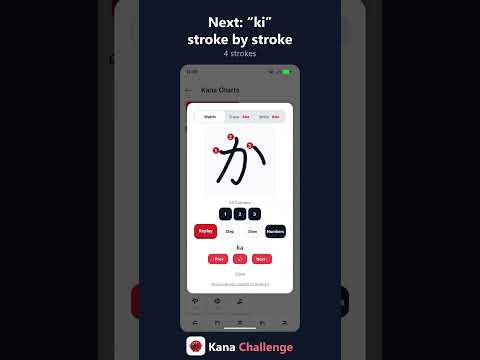
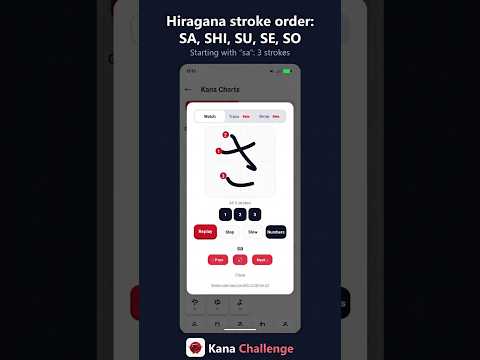
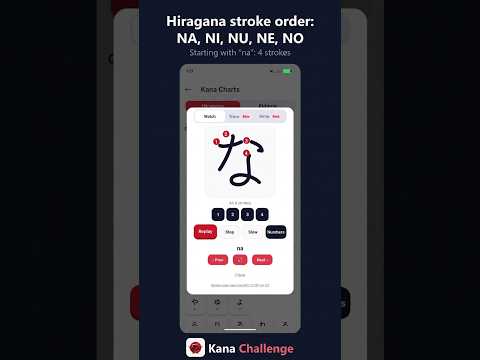
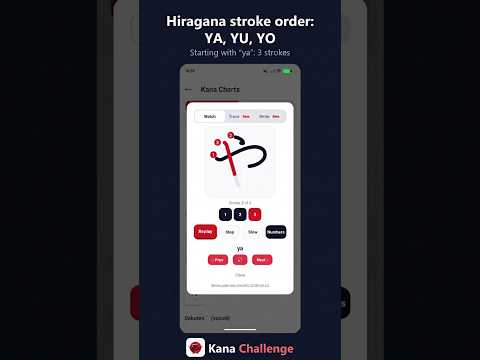
Most kana follow the same rules as other Japanese writing: strokes go from top to bottom and from left to right, and when strokes cross, the horizontal stroke usually comes before the vertical one. The row sections on this page show the exact order for each of the 46 basic hiragana, one letter at a time.
How many strokes does each hiragana have?
Each basic hiragana takes between 1 and 4 strokes. In this chart, 1 stroke: く, し, そ, つ, て, の, ひ, へ, る, ろ, ん; 2 strokes: い, う, え, こ, す, ち, と, ぬ, ね, み, め, ゆ, よ, ら, り, れ, わ; 3 strokes: あ, お, か, け, さ, せ, に, は, ま, む, も, や, を; 4 strokes: き, た, な, ふ, ほ.
Why do some fonts make a kana look like it has fewer strokes?
Printed fonts often join strokes that handwriting keeps separate, for example in さ, き and ふ. The counts on this page follow the standard handwriting order from the KanjiVG data set.
Is there an app that animates hiragana stroke order?
Kana Challenge has a Kana Charts screen where you tap any kana on the basic chart to watch its strokes being drawn in order, with a replay, a step button and a slow mode. The videos on this page were recorded from that screen.